Yesterday I told you where fronts came from - a 21-year-old in an attic in Bergen, borrowing the vocabulary of war. Today: how humans actually find them.
What a Synopticist Sees
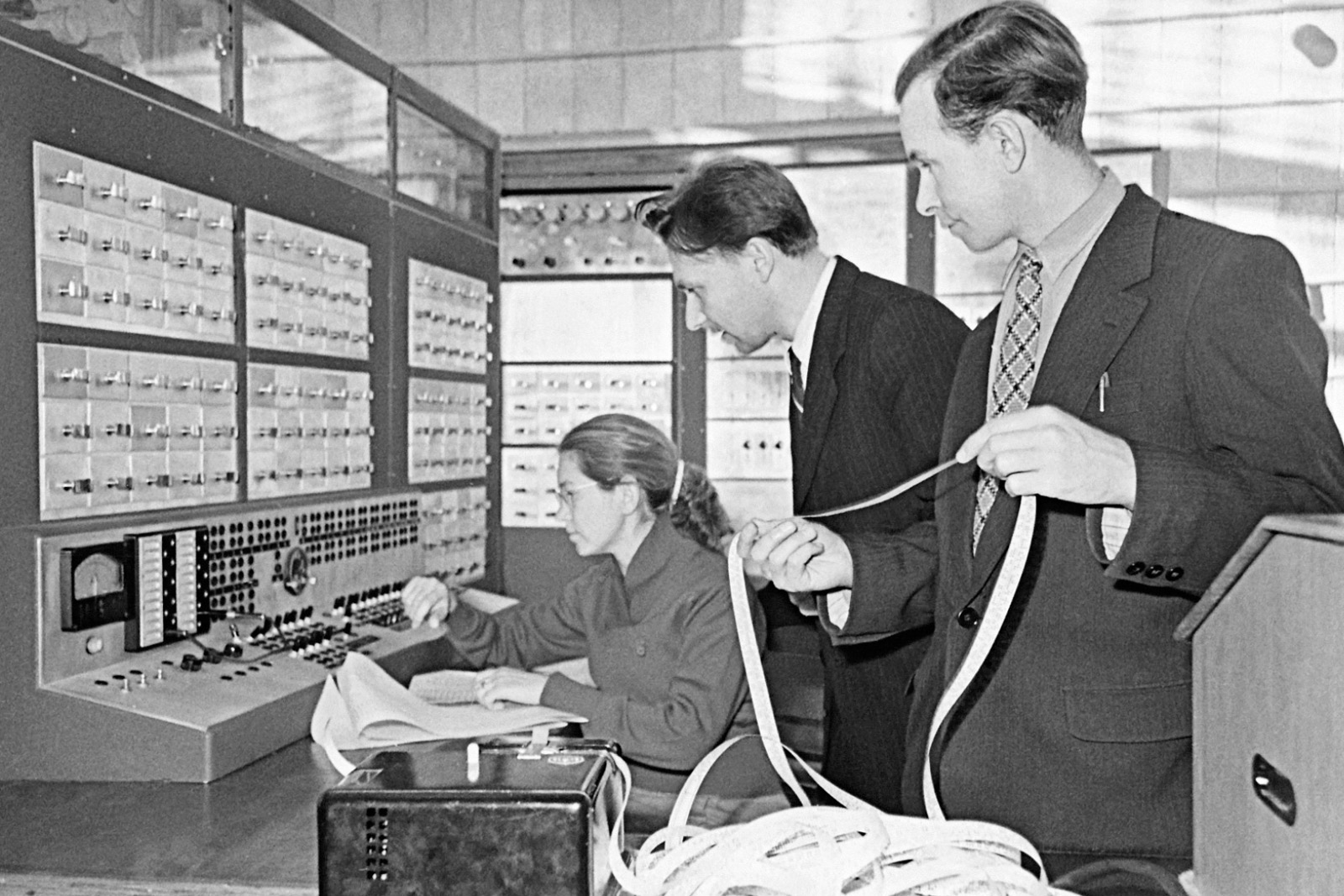
For most of the 20th century, fronts were analyzed by hand. A trained synoptic meteorologist - a human being with years of pattern recognition experience - would sit at a desk covered with surface observations and draw the fronts by eye.
What did they look at? The station model - a compact plot at each observation point showing temperature, dew point, wind speed and direction (as barbs), pressure, pressure tendency, weather, cloud cover, and cloud types. Each station model is a tiny portrait of the atmosphere at that point.
A front reveals itself through a combination of signals:
- Temperature: Sharp gradient. Isotherms packed tightly together.
- Dew point: Often more reliable than temperature. A dew point plunging 10C behind a cold front passage is unmistakable.
- Wind shift: Abrupt change in direction. Cold front passage in the Northern Hemisphere: wind swings from southwest to northwest.
- Pressure tendency: Both front types lie in pressure troughs, but the signature differs. Cold front: pressure falls ahead, then rises sharply after passage. Warm front: pressure falls steadily as the front approaches, then levels off after passage.
- Cloud sequence: Before a warm front: cirrus, then cirrostratus, then altostratus, then nimbostratus - a textbook progression that takes 12-24 hours to unfold.
- Precipitation: Narrow band of heavy showers behind a cold front. Broad shield of steady rain ahead of a warm front.
No single parameter was enough. The skill was in integrating all of them simultaneously - recognizing the pattern in the noise, the front in the data. It was learned through apprenticeship, not from textbooks.
There’s a term for the two flavors of front that this analysis reveals: an anafront is an active, unstable boundary with strong uplift, significant weather, and heavy precipitation. A katafront is weaker - bringing smaller changes in temperature and moisture, with limited rainfall. The distinction matters for forecasting, and it’s one of those things a trained eye picks up instantly.
Then Came the Satellites
In the 1970s and 1980s, Keith Browning at the Met Office championed and synthesised the conveyor belt model of cyclones (Browning, 1986) – a framework whose key elements had been introduced by Harrold (1973) and Carlson (1980). Browning was known among colleagues for his intuitive grasp of complex three-dimensional meteorological processes – his gift for distilling them into clear conceptual models.
Instead of thinking about fronts as static lines on a map, Browning described three-dimensional rivers of air flowing through cyclones:
The Warm Conveyor Belt (WCB): A coherent stream of moist, warm air rising from the surface to the upper troposphere along the frontal zone. This is what produces most of the precipitation in a mid-latitude cyclone. It originates in the low-level southwesterly flow ahead of the cold front and ascends vigorously – the modern operational definition of a WCB trajectory is an ascent of at least 600 hPa of pressure (roughly 7-8 km of altitude) within 48 hours (Madonna et al., 2014). On satellite imagery it appears as the elongated cloud band above the warm front (Browning, 1986; Harrold, 1973).
The Cold Conveyor Belt (CCB): Flows from east to west beneath the warm conveyor belt, north of the warm front. Rises and turns as it goes. Its structure has been debated – David Schultz (2001) reexamined the CCB and showed that what appears as one airstream in some depictions is really two distinct paths (cyclonic and anticyclonic) – but the concept remains useful for understanding the low-level flow north of warm fronts.
The Dry Intrusion (DI): Descends from the upper troposphere or even the stratosphere, bringing cold, dry air with high potential vorticity. On water vapor imagery, it shows up as the dark “dry slot” curling behind the cold front - one of the most recognizable features in satellite meteorology.
Reading Clouds Like an X-Ray
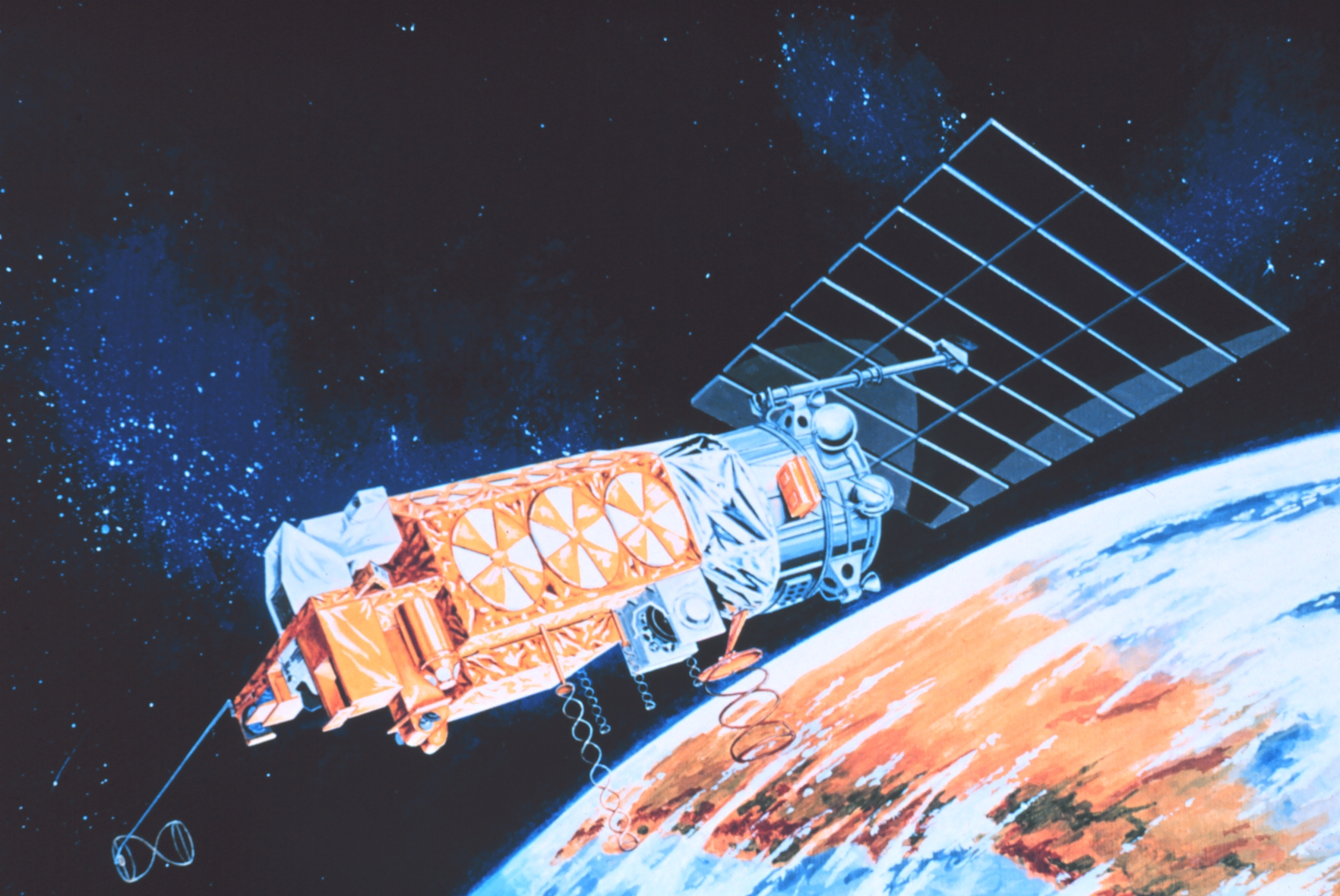
The conveyor belt model was transformative because it connected the Norwegian cyclone model (lines on a map) to what meteorologists could actually see on satellite images (cloud patterns in three dimensions). The Met Office and European forecasters - using Meteosat imagery from geostationary orbit, and later the SEVIRI instrument on MSG (Meteosat Second Generation), imaging every 15 minutes - developed deep expertise in reading fronts from cloud signatures:
-
Comma cloud: The classic comma-shaped cloud pattern of a developing extratropical cyclone. The head of the comma wraps around the low center; the tail extends along the cold front. Active meteorologically, associated with cyclonic vorticity advection and heavy rain.
-
Leaf cloud: An early-stage cloud pattern shaped like a leaf - indicating a developing wave on the frontal zone before it matures into a full cyclone. Spotting a leaf cloud early is like catching a disease in its early stages.
-
Wishbone pattern: Mature depressions on infrared imagery often show two prongs of cloud. The cold front trails as the distinctive edge of the left prong.
-
Water vapor dark slot: The dry intrusion curling around behind the cold front - visible on the 6-7 micrometer water vapor channel even where skies are cloud-free. This channel “sees” moisture in the mid-to-upper troposphere. Bright = moist. Dark = dry, subsiding stratospheric air.
British satellite meteorology became a tradition in itself - forecasters who could read the atmosphere from a single water vapor image the way a radiologist reads an X-ray. The conveyor belt model gave them a theoretical framework; the satellite gave them the picture. Together, they transformed operational forecasting.
As the EUMeTrain satellite manual notes: “It shows a higher variety of possible developments and clearly indicates that the Occlusion process as described by the Norwegian model only represents a special case.”1
The Norwegian model drawn in an attic in 1919. The conveyor belts described at the Met Office in the 1970s-80s. The satellite images beamed down every 15 minutes. Three generations of understanding, layered on top of each other - and still, at the center of it all, a human being looking at patterns and deciding: that’s a front.
Tomorrow: why the models still can’t do what the human does - the resolution problem, the diagnostic tools, and the machines that are trying to learn.
Footnotes
References
- Browning, K. A. (1986). Conceptual Models of Precipitation Systems. Weather and Forecasting, 1(1), 23-41. AMS
- Carlson, T. N. (1980). Airflow through midlatitude cyclones and the comma cloud pattern. Monthly Weather Review, 108(10), 1498-1509.
- Harrold, T. W. (1973). Mechanisms influencing the distribution of precipitation within baroclinic disturbances. Q. J. R. Meteorol. Soc., 99, 232-251. DOI
- Madonna, E., Wernli, H., Joos, H., & Martius, O. (2014). Warm conveyor belts in the ERA-Interim dataset (1979-2010). Part I: Climatology and potential vorticity evolution. Journal of Climate, 27(1), 3-26.
- Schultz, D. M. (2001). Reexamining the Cold Conveyor Belt. Monthly Weather Review, 129(9), 2205-2225.
- Dacre, H. (2020). A review of extratropical cyclones: observations and conceptual models over the past 100 years. Weather, 75(4). RMetS
- EUMeTrain. Conveyor Belt Model
- EUMeTrain. Comma Cloud
- Met Office. Satellite Pictures
- EUMETSAT. MSG/SEVIRI
- WPC/NCEP. Unified Surface Analysis Manual
Current status:
- The comma cloud: Visible from space, named after punctuation.
- The dry slot: Dark on WV imagery, cold in reality, beautiful in both.
- Tomorrow: We teach the machine to see what we see.
Yours Truly
-
EUMeTrain. Conveyor Belt Model. resources.eumetrain.org. ↩